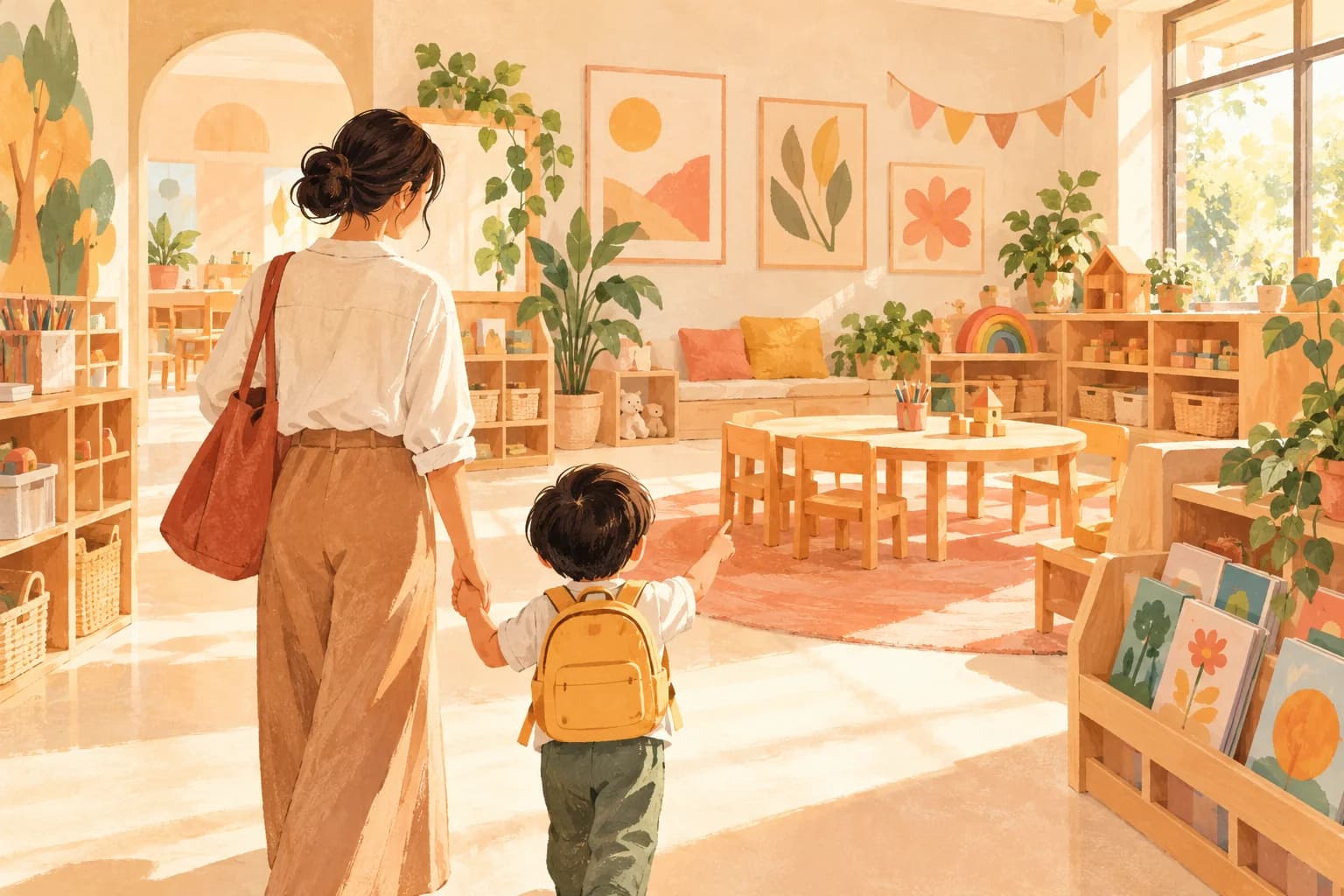
A preschool visit is most useful when you watch an ordinary transition, not just the brightest classroom. A child will spend time arriving, eating, resting, using the toilet and being collected as well as joining planned activities. Ask the same questions at each Singapore centre and write down answers before a friendly tour blurs them together.
What should you arrange before visiting?
Ask to see the room and care period your child would actually use. If you need full-day care, a morning programme tour alone is incomplete. ECDA's parent pathway for choosing a preschool points families to preschool search and subsidy information; confirm the centre's current registration and programme details through official and operator sources. MOE's Kindergarten overview describes its own programme, while Kindergarten Care is a distinct full-day option at MOE Kindergartens. Do not assume every private centre runs the same hours or structure.
Tell the centre the child's age, intended start month and care hours. Ask who will conduct the visit, whether you may see a normal day and whether a settling-in period is offered. Bring a short list of the child's needs without sending unnecessary sensitive documents before deciding if the operator is suitable. If the child is with you, allow time for them to look around rather than using the whole visit for an adult interview.
Which moments reveal the daily routine?
Watch how a child moves from one activity to another, where belongings go and whether there is enough space for quiet as well as active play. Ask how staff handle a child who is upset at drop-off, who helps with toileting, how meals and rest work, and how the centre communicates an injury or a difficult day. Ask who may collect the child and how a change of pickup adult is authorised. These questions do not require you to score the warmth of staff from a single snapshot; they reveal whether the centre has a clear, explainable process.
Use an illustrative family scenario: a four-year-old arrives at 8am, sometimes needs a quiet ten minutes, has a food restriction and is collected at 6pm. Ask each operator to narrate that day from arrival to pickup, including what changes on a staff absence or programme closure. This is a fictional child and schedule, not a report of any centre. Ask what happens if the family arrives late and whether a second contact can collect in an emergency.
How should you compare the written terms?
Ask for the current daily schedule, calendar, fee sheet, deposit and refund rules, illness policy, medication process where relevant, staff-to-parent contact route and withdrawal notice. MOE's 2026 Kindergarten fees page shows how programme fees and Kindergarten Care can be separate; use the full-cost worksheet to compare the actual centre's programme and care components. Do not carry MOE's fee into a private provider's quote. If subsidy is relevant, confirm the family's own eligibility through the current official process rather than treating an advertised “from” figure as the final bill.
After two visits, write one sentence for each centre: what the child might enjoy, what the family would need to manage, and what answer is still missing. A closer centre can save a hard daily handoff; a more expensive one may have hours that fit better. Give yourself a decision date that respects any application deadline without paying before critical terms are clear. The student-care comparison helps with later school-age transitions, and learning guides cover related choices. You may send BusyParents a preschool-visit question as an editorial enquiry; we do not enrol children or promise places.
Common questions
Is a morning tour enough if my child needs full-day care?
Ask about the actual care period, staff handoff, meals, rest and pickup as well as the core programme.
Are MOE Kindergarten fees a useful private-preschool quote?
No. They describe MOE's own 2026 categories; request the private operator's current written schedule and subsidy assessment.
Does a centre's pleasant tour prove how every day will feel?
No. Use the visit to ask about ordinary transitions and written policies, then compare those answers with your child's needs.
Sources
- parent pathway for choosing a preschool ecda.gov.sg
- Kindergarten overview moe.gov.sg
- Kindergarten Care moe.gov.sg
- 2026 Kindergarten fees page moe.gov.sg
Something changed or worth adding?
Send a correction or suggestion