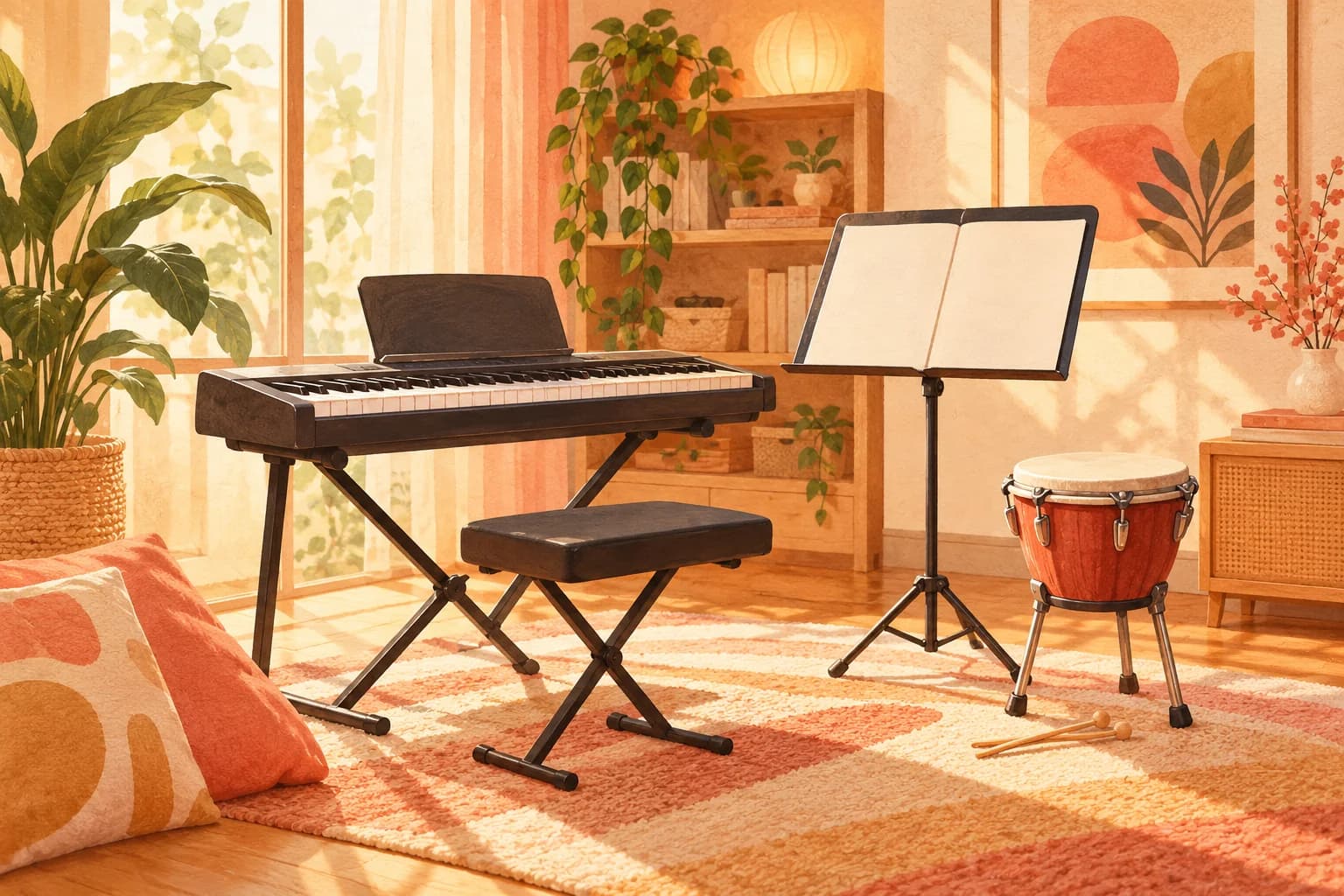
Music lessons for a beginner should make it easy to try an instrument and develop a manageable practice habit. Buying an instrument or a long term package first can turn curiosity into pressure. Ask what the child wants to do, observe a trial and compare written lesson terms before committing.
What should a beginner trial show?
For an illustrative nine-year-old interested in keyboard, a useful first lesson might include finding a short pattern, keeping a beat and explaining one practice task for the week. That is a fictional example, not a claim that one method suits every child. Observe whether the teacher adapts to the child and explains mistakes in a way the child understands. Ask whether the proposed instrument, class size and length match the child's attention and home space. If a teacher recommends a particular brand, ask why those specifications matter and whether borrowing or renting is possible for a trial period.
Look at the entire week. MOE's 2026 school terms and holidays help check term dates and missed-lesson periods. MOE's statement on assessment and wellbeing is about primary schooling, not private music teaching, but supports asking whether extra activities fit the child's overall load. A five-minute practice routine that actually happens can be more useful than an ambitious schedule that collides with homework, dinner and sleep.
How do two lesson offers compare?
Ask each provider for lesson length, group size, teacher assignment, trial price, term fee, instrument or book costs, recital or exam charges, missed-lesson policy, teacher-absence cover, notice period and refund terms. Request the total cost for one term and the first year under the same assumptions. CCCS's price-transparency guidance offers a general way to question the scope and conditions of an advertised fee. Check actual contracts; it does not establish a standard music-school cancellation rule.
A fictional Provider A might offer a low monthly class price but require separate exam preparation and materials. Provider B might include materials but run larger groups. If the family does not want exams this year, that extra price is not automatically valuable. Compare the format and the child's response as well as cost. Our enrichment class guide has a four-week fit review; the tuition guide shows how to set a narrow learning goal without assuming that more lessons are always better.
What should happen after the trial?
Agree one short goal with the teacher, such as enjoying two simple songs or keeping a steady beat, and a date to review it. Ask the child which part they want to practise. If the teacher recommends an examination track, request an explanation of time, fees and alternatives. Do not describe the child as behind based on one trial. The holiday-camp guide offers a short-format alternative if the family wants to explore music without a weekly commitment.
You can send BusyParents a music-lesson comparison question for editorial guidance. We do not have an inspected teacher directory or a promised booking route.
If the child dislikes the trial, ask what felt difficult before deciding whether to try another instrument, teacher or format.
Common questions
Must a beginner buy an instrument before the first lesson?
Ask the provider about trial, rental or borrowed options and the minimum useful specifications.
Are exams required to make progress?
No general rule makes them necessary; agree goals that fit the child's interests and schedule.
Should a term package be bought after one positive class?
Read the full cost and cancellation terms and check whether the weekly routine is sustainable.
Sources
- 2026 school terms and holidays moe.gov.sg
- statement on assessment and wellbeing moe.gov.sg
- price-transparency guidance ccs.gov.sg
Something changed or worth adding?
Send a correction or suggestion