
From January 2027, six Singapore schools will pilot what MOE calls a redesign of classrooms: more learner-centred lessons, more purposeful feedback, flexible spaces and, "where useful", smaller classes. Minister for Education Desmond Lee outlined the two shifts at MOE's Schools Work Plan Seminar on 16 September 2026, and MOE's press release names St. Anthony's Canossian Primary, Woodgrove Primary, Zhangde Primary, Commonwealth Secondary, Deyi Secondary and Jurongville Secondary as the pilot schools.
For every other family, nothing changes in January: MOE says it will work with the pilot schools before considering wider use, and will share findings when ready. What is already changing across schools is how AI is used for feedback, and MOE has set age-based rules for that. This guide covers both.
At a glance
- 16 September 2026: MOE announced two shifts, "Reimagining Learning" and "Redesigning Classrooms", in its Work Plan Seminar press release.
- January 2027: three primary and three secondary schools start the pilot.
- Smaller classes: to be explored where they help most, building on existing smaller Primary 1 and 2 classes.
- By 2027: Teacher Workspace, a single platform for teachers' daily work, rolls out to all MOE schools.
- September 2026: the month MOE gave, on 1 August, for launching a new AI Essay Marking System for secondary school Chinese Language on the Singapore Student Learning Space (SLS).
- 6 October 2026: MOE told Parliament the pilot will include classes with higher learning support needs, and that findings will be shared "when ready".
Which schools are in the 2027 pilot?
MOE named six schools. We looked each up in MOE's general information of schools dataset on data.gov.sg (337 schools, last updated 17 April 2026) to show where they are:
- St. Anthony's Canossian Primary School: Bedok; a government-aided girls' school.
- Woodgrove Primary School: Woodlands; a co-educational government school.
- Zhangde Primary School: Bukit Merah; a co-educational government school.
- Commonwealth Secondary School: Jurong East; a co-educational government school with autonomous status.
- Deyi Secondary School: Ang Mo Kio; a co-educational government school.
- Jurongville Secondary School: Jurong East; a co-educational government school.
Between them they cover all four of MOE's school zones (east, north, south and west, as the dataset labels them) and both school levels. MOE has not said which classes, levels or subjects within each school will take part.
What will change in pilot classrooms?
The press release describes two shifts.
Reimagining learning. More inquiry-based and collaborative lessons, where students apply subject knowledge to "authentic, open-ended problems" and take more ownership of their learning. MOE will also review how teachers give feedback, including clearer guidance on "the forms of marking that best support students' learning" and how technology can help.
Redesigning classrooms. MOE will explore four strategies:
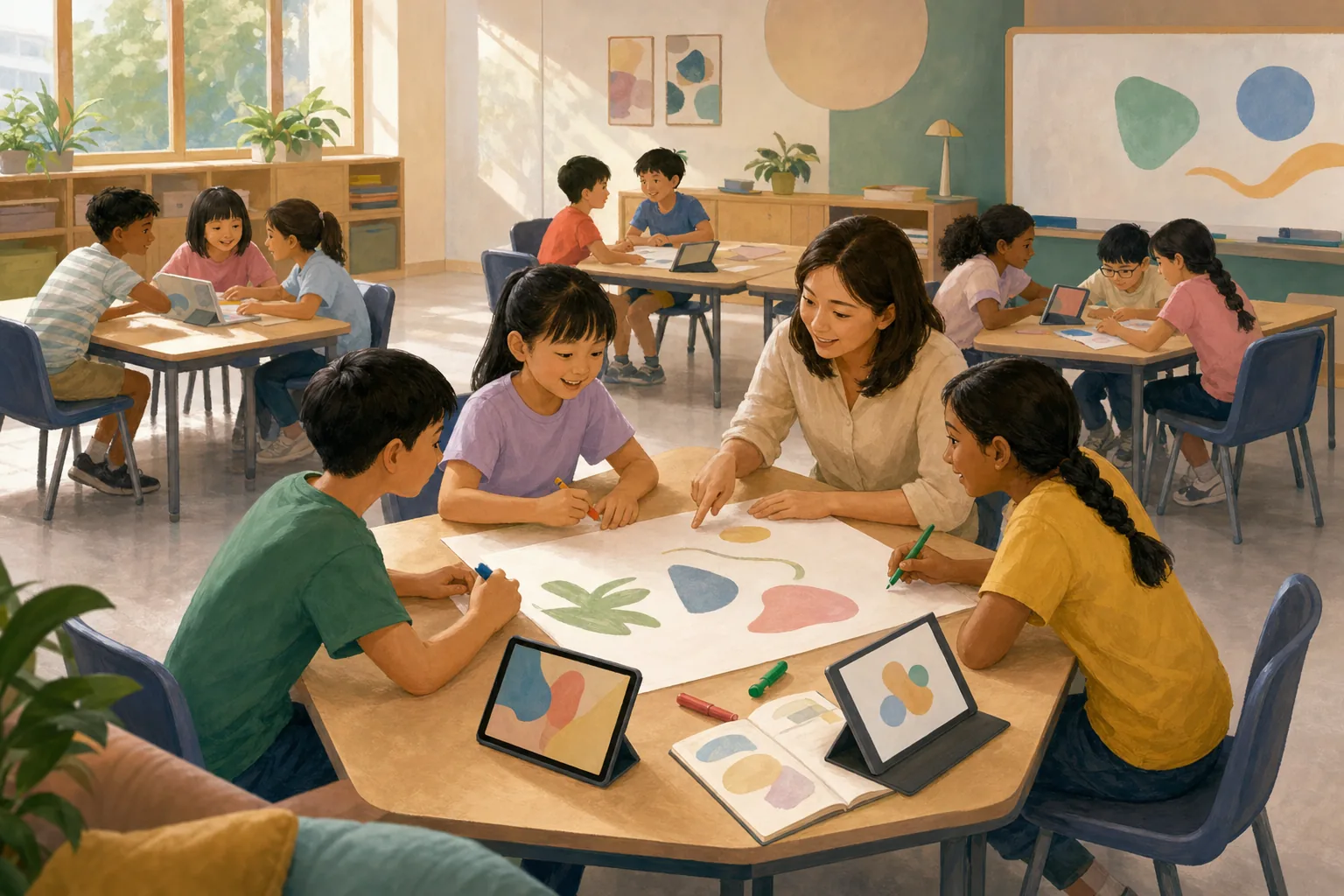
- Flexible spaces: mobile, modular furniture and rooms that switch between whole-class and small-group work.
- Teachers' time: studying whether teachers could focus on two of three duties beyond teaching (form teacher, CCAs and committee work).
- Smaller classes where useful, drawing on experience with smaller Primary 1 and 2 classes.
- Technology, such as Teacher Workspace, which brings student information and daily tools into one platform.
Will my child's class get smaller?
Not because of this announcement, unless your child is in a pilot class. MOE's 6 October 2026 reply in Parliament says its approach to class size "has consistently been guided by the learning needs of our students", with smaller classes used selectively today for younger learners and students needing learning support.
The reply says the pilot "goes beyond class sizes": it will study how teaching loads, timetabling, teachers' responsibilities, technology and learning spaces work together, including in classes with higher learning support needs. MOE will monitor student outcomes and teacher workload, and share findings when ready. It gave no date for a decision on wider use.
How is AI used in classrooms now?
MOE's AI in education page (updated 31 July 2026) sets out what happens at each stage:
- Primary 1 to 3: learning is hands-on and print-first. Students learn what AI is, AI may be used to give customised feedback, but students are not tasked to use chatbots.
- Primary 4 to 6: students start with MOE-built AI features in SLS that have in-built guardrails, and may use selected educational AI tools in class under teacher supervision.
- Secondary and pre-university: students take more ownership, learning to check AI output for accuracy, acknowledge AI use where required and uphold academic integrity.
The feedback tools are listed on MOE's SLS AI features page: step-by-step hints on mathematics working, marking of short open-ended answers, line-by-line feedback against a teacher's rubric, and a speech tool for pronunciation and fluency in English and Mother Tongue. Teachers can review or adjust the AI's feedback. And MOE's 1 August 2026 release said a new AI Essay Marking System would launch on SLS in September 2026 to handle routine marking of grammar, spelling and sentence structure in secondary school Chinese essays, so teachers can focus on ideas and expression.
Can my child use AI for homework and exams?
It depends on the task, and the teacher decides. MOE's 18 September 2026 reply to a forum letter says teachers may "intentionally withhold" AI where that serves learning, and that the SLS Learning Assistant needs teacher activation, can be limited to a set number of interactions and prompts students to think rather than giving direct answers.
On assessment, MOE's 7 October 2026 parliamentary reply says national and school-based examinations are typically proctored and disallow AI. Where some AI use suits a task, such as certain research or coursework, students must state how they used it and remain responsible for the work.
What can parents do at home?
Our suggestions, alongside MOE's resources for parents:
- Ask the school what AI tools your child's class uses and when AI is off limits.
- Try SLS together: MOE lists parent experience modules for lower primary, upper primary and secondary.
- Agree a "try first" rule: your child attempts the question before asking any chatbot, which echoes MOE's advice to reflect before turning to AI.
- Check sources together when AI gives an answer; MOE's parent resources include a short video on using the S.U.R.E test to check whether AI output is reliable.
- Watch the evening load, not just the tools; our guide to homework that takes the whole evening helps if it is creeping up.
Children's wider online lives are changing too: see our guide to Singapore's social media age limit. For secondary school subject levels, read our Full SBB guide. More in our learning topic.
Common questions
Which schools are piloting MOE's classroom redesign in 2027?
St. Anthony's Canossian Primary, Woodgrove Primary, Zhangde Primary, Commonwealth Secondary, Deyi Secondary and Jurongville Secondary, starting in January 2027.
Are class sizes being reduced in all schools?
No. MOE will explore smaller classes where useful within the six-school pilot and share findings when ready. It already uses smaller classes for younger pupils and students needing learning support.
Do lower primary pupils use AI chatbots in school?
No. MOE says learning in Primary 1 to 3 is print-first and students are not tasked to use chatbots, though AI may be used to give them customised feedback.
Is AI allowed in school exams?
MOE says national and school-based examinations are typically proctored and disallow AI. Where AI is allowed for coursework, students must state how they used it.
Sources
- Work Plan Seminar press release moe.gov.sg
- general information of schools dataset data.gov.sg
- 6 October 2026 reply in Parliament moe.gov.sg
- AI in education page moe.gov.sg
- SLS AI features page moe.gov.sg
- 1 August 2026 release moe.gov.sg
- 18 September 2026 reply to a forum letter moe.gov.sg
- 7 October 2026 parliamentary reply moe.gov.sg
- resources for parents moe.gov.sg
Something changed or worth adding?
Send a correction or suggestion

